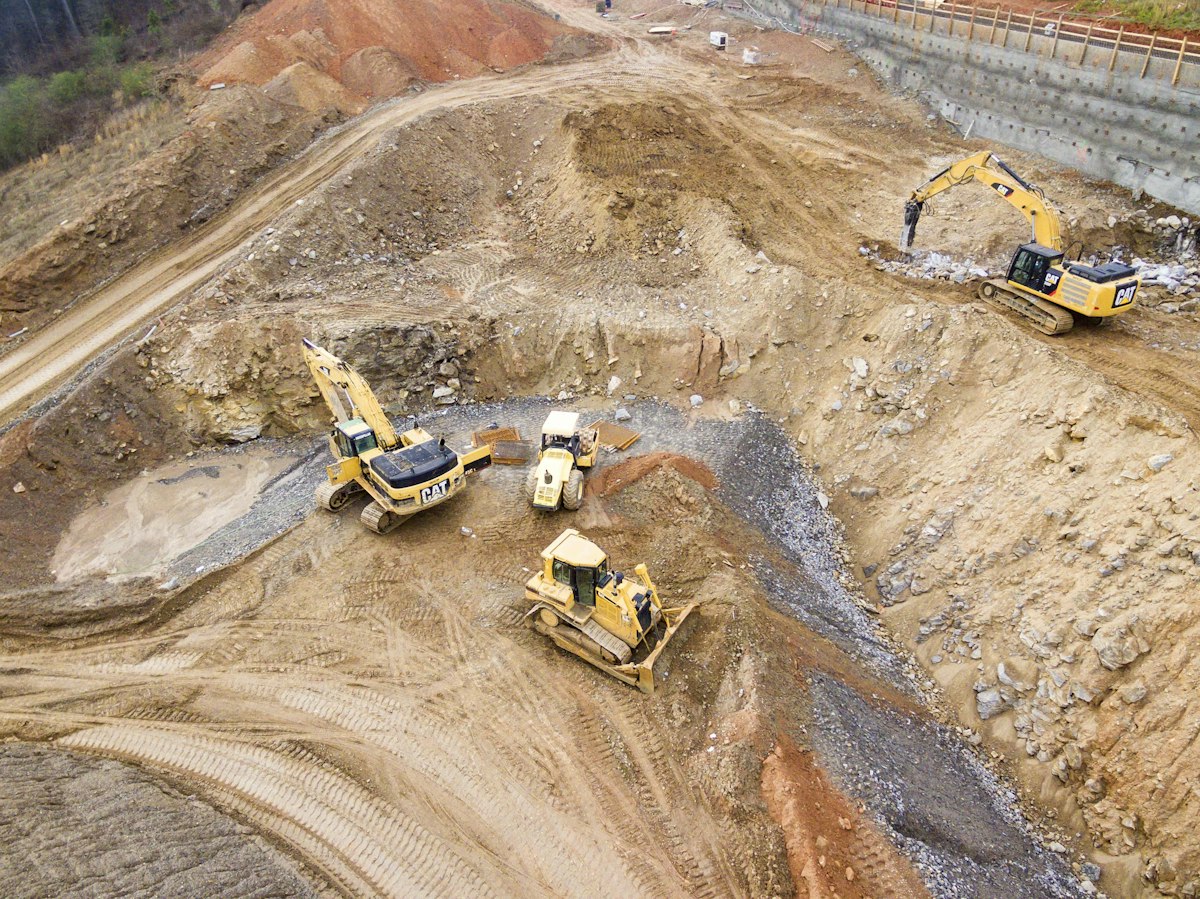
Dust is the air quality issue most likely to affect your neighbours before a single resident moves in. Demolition, digging and lorry movements throw fine particles into the air, and planning authorities increasingly want to see that the risk has been assessed and controlled. That is the job of a construction dust assessment. This guide explains when one is needed, how the IAQM method works, and what the risk categories mean for your conditions.
What a construction dust assessment is
A construction dust assessment is a structured evaluation of the dust and fine-particle (PM10) risk created while a site is being demolished and built out. It is normally prepared to the IAQM Guidance on the Assessment of Dust from Demolition and Construction, the current version of which (v2.2) was issued in January 2024. The assessment identifies how much dust each phase of work could produce, who might be affected, and what mitigation is needed to keep the residual effect “not significant” - the outcome planners are looking for.
It matters because dust is both a nuisance (soiling washing, cars and windows) and a health concern (PM10 is a regulated pollutant with air quality objectives). Unlike operational air quality, which looks at the finished development, dust assessment looks at the temporary construction phase - but planning conditions to control it are permanent obligations once granted.
The four activities the method assesses
The IAQM approach breaks a project into four separate dust-generating activities, because each behaves differently:
- Demolition - knocking down existing structures, generally the highest-energy, dustiest activity.
- Earthworks - stripping topsoil, excavating, grading and stockpiling, where large areas of bare soil can dry out and blow.
- Construction - building the new structure, including cutting, mixing and material handling.
- Trackout - dust and mud carried onto the public road by vehicle wheels and then re-suspended by passing traffic.
Each activity is assessed on its own, so a site can be high risk for earthworks but low risk for construction, and the mitigation is tailored accordingly.
Do you even need one? The screening step
Not every project needs a full assessment. The IAQM method starts with a screening test based on the proximity of receptors - the people and habitats that could be affected. In broad terms, an assessment is required where there is:
- a human receptor within 350 m of the site boundary; and/or
- a human receptor within 50 m of the route(s) used by construction vehicles on the public highway, up to 500 m from the site entrance.
Sensitive ecological sites are screened on similar distances. If receptors fall within these distances - which, on most urban and suburban sites, they will - the site is screened in and a full assessment follows. If nothing sensitive lies nearby, a short screening statement may be all that is needed. Our overview of what an air quality assessment is and why planning requires one sets this in the wider AQA context.
How the risk categories are worked out
For each of the four activities, the assessment combines two things:
- The dust emission magnitude - classed as Small, Medium or Large, driven by the scale of the work: the volume of building being demolished, the area of earthworks, the number of dwellings, the tonnage of material moved and the length of haul routes.
- The sensitivity of the surrounding area - how many receptors there are, how sensitive they are, how close, and the local background PM10 concentration.
Combine the two and you get the risk of dust impacts with no mitigation applied, expressed for each activity as negligible, low, medium or high. The higher the risk category, the more extensive the site-specific mitigation the assessment must specify.
From risk to mitigation
The point of the risk rating is to size the control measures proportionately. A high-risk earthworks phase might require damping down of haul routes and stockpiles, wheel-washing at exits, sheeting of loads, real-time dust monitoring and a nominated site contact for complaints. A low-risk construction phase might need only good-practice housekeeping. Crucially, the IAQM method assumes that with well-designed mitigation the residual effect is normally not significant - so the assessment is less about blocking a scheme and more about proving the risk is manageable and setting the conditions to manage it.
These measures are then typically secured through a planning condition, often a Construction Environmental Management Plan (CEMP) or a dust management plan, which the contractor must follow on site.
How Fortress Associates can help
Fortress Associates prepares automated, site-specific air quality assessments for planning applications, including construction-phase dust screening to the IAQM 2024 methodology. Our reports use live official datasets - Defra background maps, AQMA boundaries and traffic data - and follow EPUK/IAQM criteria and Defra LAQM.TG(22). The report is free and ready in minutes, giving you an early read on whether dust and operational air quality are likely to be issues for your site. Try our air quality assessment service, see the full services page, or get in touch with your site details.
Sources & further reading
Need help with a UK planning project?
Fixed-fee daylight & sunlight reports and Building Regulations drawings - delivered in 4–5 working days, no advance payment - plus flood risk assessments, air quality assessments, energy statements and sustainability statements for planning applications across the UK.
Request a free quote