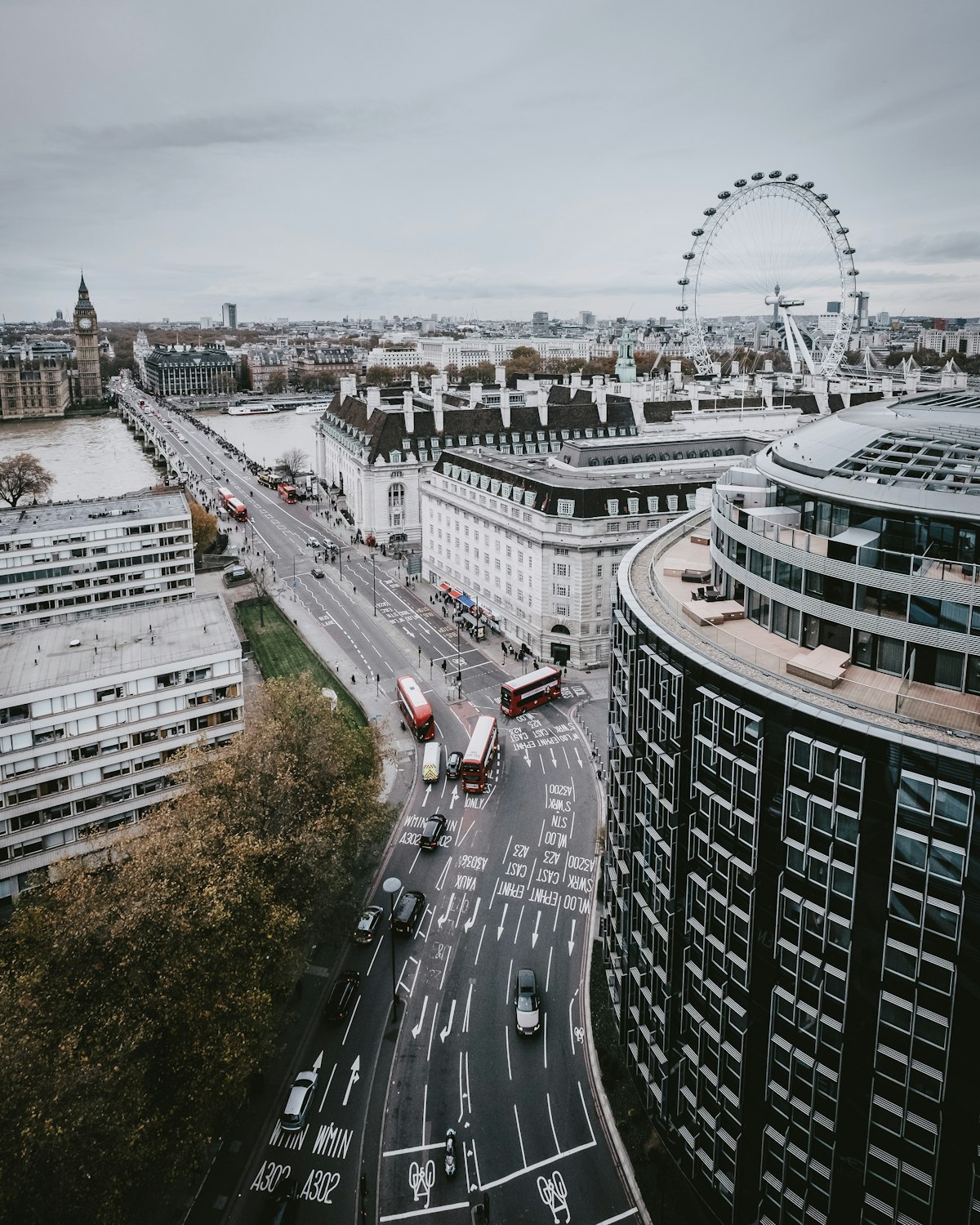
Four pollutants do almost all the work in a planning air quality assessment: nitrogen dioxide (NO2), oxides of nitrogen (NOx), and airborne particles known as PM10 and PM2.5. If your development is near a busy road, inside an Air Quality Management Area, or introduces new homes to a polluted location, these are the numbers a planning officer will look for.
This guide explains what each pollutant is, where it comes from, the legal objectives they are judged against, and how an assessment actually measures them - useful whether you are an architect scoping a submission or a homeowner trying to read a report.
The four pollutants planners care about
Nitrogen dioxide (NO2) is the pollutant most likely to drive a planning air quality assessment. It comes mainly from combustion - principally road traffic, especially older diesel vehicles - and it irritates the airways and worsens respiratory conditions. Concentrations are highest beside busy roads and junctions, which is exactly where new housing is often proposed.
Oxides of nitrogen (NOx) is the umbrella term for NO and NO2 together. While NO2 matters for human health, NOx as a whole is assessed for its effect on sensitive habitats - designated ecological sites near roads can be harmed by nitrogen deposition, so schemes that increase traffic near them may need a NOx assessment.
Particulate matter (PM10 and PM2.5) is the mix of tiny solid and liquid particles suspended in the air. PM10 is particles up to 10 micrometres across; PM2.5 is the finer fraction up to 2.5 micrometres, small enough to reach deep into the lungs and bloodstream. Sources include vehicle exhaust, brake and tyre wear, construction dust and domestic burning. PM2.5 is now regarded as the pollutant with the greatest impact on public health.
The objectives and limits your assessment is judged against
An assessment compares predicted concentrations with the UK air quality objectives set out in Defra’s technical guidance, LAQM.TG(22). The headline figures are:
- NO2: an annual mean objective of 40 µg/m³, plus a 1-hour mean of 200 µg/m³ not to be exceeded more than 18 times a year.
- PM10: an annual mean of 40 µg/m³, plus a 24-hour mean of 50 µg/m³ not to be exceeded more than 35 times a year.
- PM2.5: tightened under the Environment Act 2021, which sets an annual mean target of 10 µg/m³ by 2040 and an interim target of 12 µg/m³. We cover this in detail in our post on PM2.5 and the Environment Act targets.
Whether a site is likely to breach these depends heavily on background concentrations and proximity to traffic. An Air Quality Management Area is declared precisely where an objective - usually the NO2 annual mean - is being exceeded, which is why an AQMA almost always triggers an assessment.
How an air quality assessment measures them
A planning assessment does not rely on a single measurement. It combines several official data sources: Defra’s background concentration maps for the site’s grid square, local authority monitoring data (diffusion tubes and automatic analysers), Department for Transport traffic counts, and, where the scheme is large enough, dispersion modelling that predicts how pollutants spread from roads to the proposed windows and gardens. The results are compared against the objectives above and assessed using the EPUK/IAQM land-use planning criteria.
Two things are worth watching in 2026. Defra publishes updated national diffusion tube bias adjustment factors each spring, which local authorities must apply before analysing their monitoring data, and a new national air quality framework is expected during the year. Both can shift the background figures your assessment relies on, so current data matters.
When does a scheme actually need a full assessment?
Not every application needs detailed modelling of all four pollutants. Under the EPUK/IAQM approach, an assessment is usually required where a site sits within or near an AQMA, where the development will change traffic significantly, where sensitive uses such as homes, schools or care facilities are introduced to a polluted location, or where large commercial or industrial activity is proposed. There are two sides to this. Exposure asks whether new residents would be exposed to concentrations above the objectives - the concern when you place bedrooms beside a busy road. Impact asks whether the development’s own traffic or emissions worsen air quality for existing neighbours. A construction-phase dust assessment, judged against IAQM dust guidance, is a third strand that many otherwise low-risk schemes still need for their demolition and earthworks. Where the risk is genuinely low, a concise air quality statement rather than a full modelled assessment is often enough - and identifying that early saves time and cost.
How Fortress Associates can help
Fortress Associates produces automated air quality assessments for planning applications across every UK local authority. The report uses live official data at the moment it is created - Defra background maps, national AQMA boundaries, monitoring networks and DfT traffic counts - to assess NO2, NOx, PM10 and PM2.5 against the objectives, and follows IAQM, EPUK/IAQM and LAQM.TG(22) guidance. The report is free and ready in minutes. Start on our air quality assessment page or ask a question through contact; you can also browse our full services.
Sources & further reading
Need help with a UK planning project?
Fixed-fee daylight & sunlight reports and Building Regulations drawings - delivered in 4–5 working days, no advance payment - plus flood risk assessments, air quality assessments, energy statements and sustainability statements for planning applications across the UK.
Request a free quote