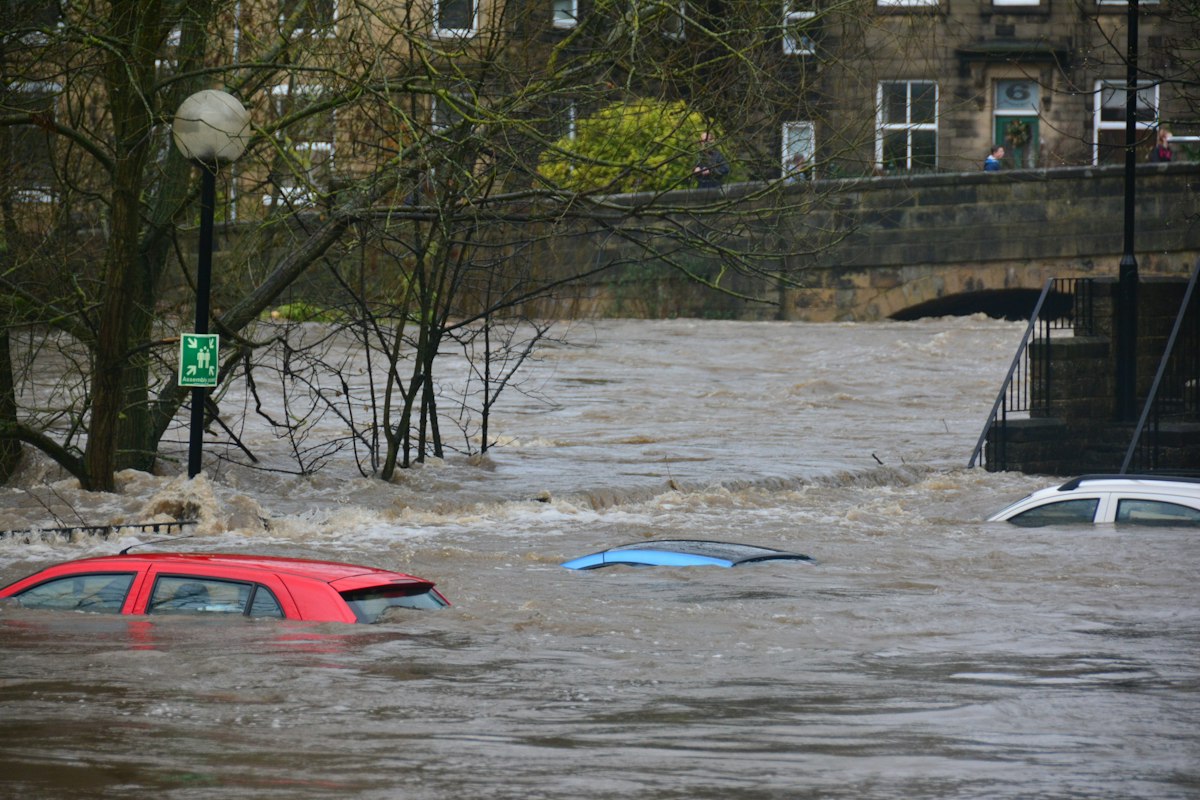
Not every house extension needs a flood risk assessment, but many applicants are caught out by the ones that do. The short answer: if your extension sits in Flood Zone 2 or 3, or in an area with recorded surface water flood risk, your local planning authority will almost certainly ask for an FRA - even for a modest rear or side extension. This guide explains exactly when one is required in 2026 and what has just changed.
Fortress Associates provides an automated, site-specific flood risk assessment for householder extensions in England, so it is worth knowing where the thresholds fall before you submit.
When a house extension needs a flood risk assessment
A flood risk assessment is triggered mainly by location and, sometimes, by size. For a typical domestic extension you will usually need one if any of the following apply:
- The property lies in Flood Zone 2 or Flood Zone 3 on the Environment Agency flood map for planning.
- The site is in an area at risk of surface water (pluvial) flooding, or within a Critical Drainage Area identified by the lead local flood authority.
- The site is larger than 1 hectare, even in Flood Zone 1 (uncommon for a single dwelling, but relevant for large plots).
- The local validation checklist or a pre-application response specifically asks for one.
If the property is comfortably in Flood Zone 1 with no surface water flag and the plot is under a hectare, an FRA is usually not required for a householder extension. The safest first step is always to check the flood risk for the postcode before you design.
The sequential test is usually waived for householder extensions
One point causes a lot of unnecessary worry. National Planning Practice Guidance is clear that the sequential test - the requirement to steer development towards lower-risk land - does not need to be applied to householder applications such as extensions and alterations to an existing dwelling. That does not remove the need for a flood risk assessment itself, but it does mean you are not expected to prove your own home could be relocated to a drier site. The FRA instead focuses on managing risk to the extension and not increasing risk elsewhere.
What the assessment actually looks at
For a house extension, a proportionate FRA concentrates on a handful of practical issues rather than a full catchment study:
- Flood zone and sources of risk - river, sea, surface water, groundwater and any ordinary watercourses nearby.
- Finished floor levels - the Environment Agency's standing advice is to set floor levels above the modelled flood level plus a freeboard allowance. Our guide to finished floor levels and property flood resilience explains the detail.
- Resilience and resistance measures - such as raised electrics, flood-resistant materials and, where relevant, flood barriers.
- Surface water and drainage - ensuring the extra roof and paved area does not worsen runoff, using sustainable drainage where practical.
Surface water - the risk most extensions miss
Many applicants assume they are safe because they are nowhere near a river. Yet surface water flooding is now the most widespread source of flood risk in England, and adding an impermeable extension and patio can push more water onto neighbours. A good FRA shows how the extra runoff is controlled - through permeable surfaces, water butts, soakaways or a small attenuation feature - keeping the drainage strategy in line with current expectations.
What changed in 2026
On 28 May 2026 the Environment Agency added surface water climate-change extents and, importantly, banded flood-depth information to the flood map for planning. For the first time this gives design teams nationally consistent data on how deep flooding could be, not just where it might reach - which feeds directly into finished floor levels and resilience design. If your project relied on an older assessment, the new depth bands are worth checking; our 2026 flood map update guide covers what is new.
How Fortress Associates can help
Fortress Associates produces a site-specific flood risk assessment for householder extensions and small-scale applications in England, using live Environment Agency data and following the Environment Agency FRA template (March 2025). The report is free, ready in minutes, and covers flood zone screening, surface water risk, finished floor levels and a SuDS drainage strategy to CIRIA C753 where needed. Explore our services or contact us if you are unsure whether your extension needs one.
Sources and further reading
Need help with a UK planning project?
Fixed-fee daylight & sunlight reports and Building Regulations drawings - delivered in 4–5 working days, no advance payment - plus flood risk assessments, air quality assessments, energy statements and sustainability statements for planning applications across the UK.
Request a free quote